
The Call That Strikes Fear
"All hands meeting in Conference Room B at 2 PM. Mandatory attendance." These eight words have become the modern equivalent of hearing the Four Horsemen of the Apocalypse clip-clopping down your corridor. Because you know what's coming: another diversity and inclusion presentation that will achieve precisely nothing except making everyone slightly more cynical about corporate initiatives.
I've sat through seventeen of these presentations in the past three years. Seventeen. That's roughly eight hours of my life I'll never get back, spent watching colleagues nod thoughtfully at pie charts about workplace belonging while secretly calculating how many cups of tea they could have made instead.
The Sacred Liturgy
Every D&I presentation follows the same liturgical structure, as rigid and predictable as a Church of England service. First comes the Land Acknowledgement – a paragraph about whose ancestral lands the office building sits on, read by someone who pronounces it like they're ordering from a particularly challenging restaurant menu.
 Photo: Church of England, via c8.alamy.com
Then we get the Statistics Avalanche: workplace demographics broken down by gender, ethnicity, age, and seventeen other categories, presented as if this data will somehow shame us into being better people. "Only 23% of our leadership team are women," announces Sarah from HR, as if this revelation will cause the assembled middle managers to immediately promote the nearest female colleague out of pure guilt.
Stock Photo Bingo
No corporate diversity presentation is complete without the ritual display of Stock Photos That Mean Business. You know the ones: impossibly diverse teams of attractive people laughing at laptops, pointing enthusiastically at whiteboards, or high-fiving over what appears to be the world's most exciting spreadsheet.
These photos exist in a parallel universe where every workplace contains exactly one person from each demographic group, all of whom are perpetually delighted to be there. Real offices, of course, are full of people like Derek from Accounts, who's been wearing the same jumper since 2019 and has never high-fived anyone in his life.
The Buzzword Bingo Championship
The language of these presentations has evolved into its own dialect – a sort of Corporate Esperanto that sounds meaningful but says nothing. We're told about "inclusive leadership journeys" and "authentic belonging experiences." Someone will definitely mention "psychological safety" and "unconscious bias mitigation strategies."
My personal favourite was a presentation that used the phrase "intersectional allyship activation" with a straight face. I'm still not entirely sure what that means, but it sounds like something you'd need a PhD and a manual to operate safely.
The Interactive Portion (AKA The Awkward Bit)
Halfway through, there's always an "interactive element" – usually breakout groups where you're supposed to discuss "lived experiences" or "microaggression awareness" with Kevin from IT and Janet from Procurement. These conversations have all the natural flow of a three-legged giraffe attempting ballet.
"So," says Kevin, consulting his worksheet, "can anyone share a time when they felt excluded?" The silence that follows could power a small wind farm. Eventually, someone mentions that time the office coffee machine was moved without consultation, and everyone nods as if this represents a breakthrough in human understanding.
Action Plans That Never Get Actioned
Every presentation culminates in The Action Plan – a document so beautifully crafted it could hang in the Tate Modern. It contains objectives like "Foster an environment of inclusive excellence" and "Implement bias-interrupted recruitment processes." These plans have timelines, responsible parties, and success metrics that sound impressively scientific.
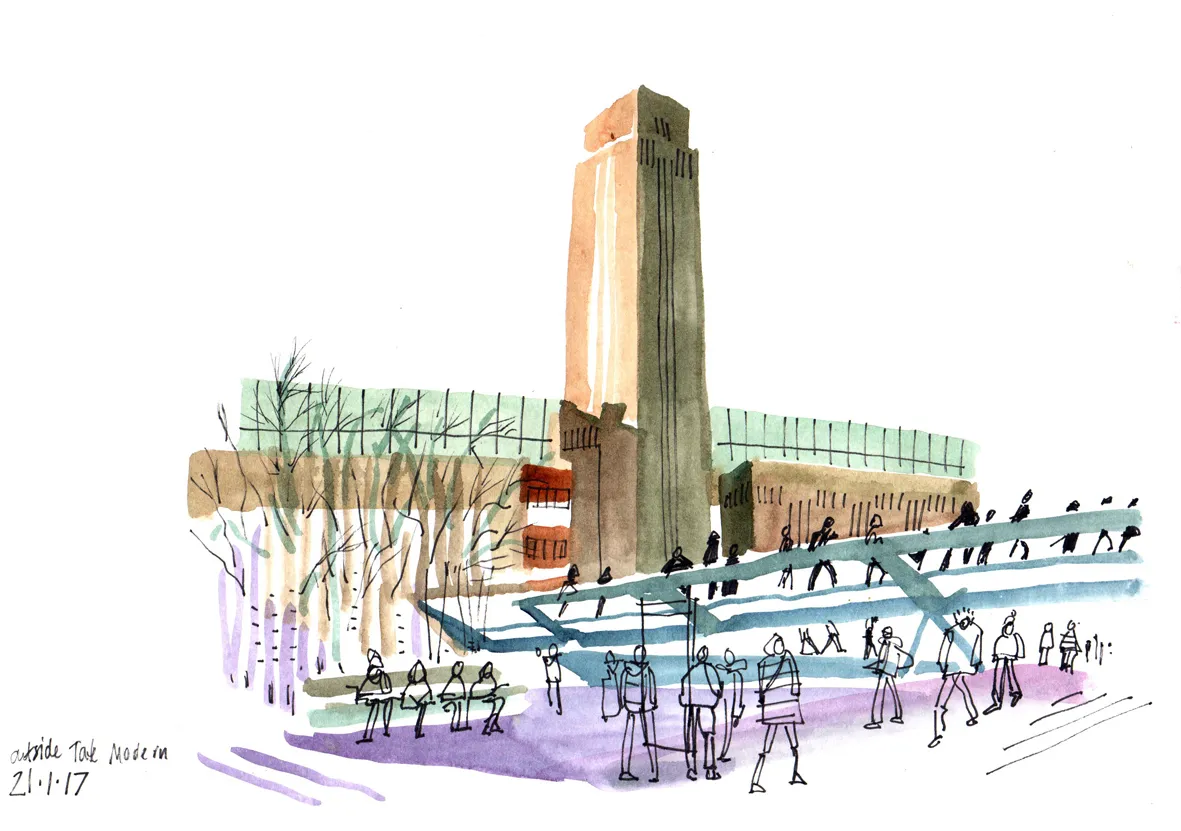 Photo: Tate Modern, via 1.bp.blogspot.com
The dirty secret? Nobody ever looks at these action plans again. They disappear into the same digital void as last year's team-building exercise feedback and that strategic review that was going to "revolutionise our customer engagement paradigm."
The Anonymous Feedback Ritual
At the end, we're invited to provide "honest feedback" via an anonymous online form. This is meant to create a "safe space for authentic dialogue," but mostly it's an opportunity for passive-aggressive comments about the room temperature and whether the biscuits were adequately diverse.
The feedback is collected, analysed, and turned into another presentation about how we need better communication about our diversity initiatives. It's presentations all the way down.
The Elephant in the Conference Room
The fundamental absurdity of these events is that they're trying to solve complex social issues through PowerPoint slides and workshop activities. It's like trying to cure loneliness with a spreadsheet or address climate change through interpretive dance.
Real change in workplace culture happens through consistent daily actions, fair policies, and leadership that actually gives a damn. But that's harder to measure, harder to present, and much harder to tick off a compliance checklist.
The Performance of Caring
What these presentations really represent is the performance of caring – corporate theatre designed to demonstrate that Something Is Being Done. They're not about changing minds or behaviours; they're about protecting the organisation from criticism and making executives feel like they're addressing important issues.
Everyone in the room knows this, but we all participate in the collective pretence that sitting through "Unconscious Bias: A Journey Towards Awareness" for 90 minutes will somehow make us better colleagues. It's a shared delusion, like believing that clicking "I agree" on terms and conditions means you've actually read them.
The Real Diversity Challenge
Here's the thing: workplace diversity and inclusion are genuinely important issues that deserve serious attention. But death-by-PowerPoint presentations aren't serious attention – they're the corporate equivalent of thoughts and prayers.
If organisations really wanted to improve diversity and inclusion, they'd look at their hiring practices, promotion criteria, and company culture with the same rigour they apply to quarterly financial reports. They'd make systemic changes rather than scheduling another workshop about "microaggression mitigation."
Breaking the Cycle
Until then, we're trapped in an endless cycle of presentations that change nothing except the date on the slide deck. Next month, there'll be another all-hands meeting, another mandatory attendance email, and another hour of our lives devoted to watching someone click through slides about "cultural competency frameworks."
And we'll all attend, because that's what good employees do. We'll nod at the appropriate moments, participate in the breakout discussions, and fill out the feedback form. Because the alternative – actually admitting that this is all performative nonsense – would require a level of honesty that most organisations simply aren't ready for.
So here we sit, thirty-seven slides into nothing, waiting for the sweet release of "Any questions?" followed immediately by the blessed silence of people pretending they have urgent emails to check.