The Great Pronunciation Wars: How Saying 'Bicester' Wrong Became a Capital Offence
The Initiation Test
There's a moment in every outsider's British experience when they confidently pronounce 'Leicester' as 'Lie-sess-ter' and watch an entire room of locals exchange the sort of meaningful glances usually reserved for war crimes tribunals. Congratulations: you've just failed the most brutal entrance exam in British culture.
Welcome to the Great Pronunciation Wars, where getting 'Worcestershire' wrong marks you as irredeemably foreign, and saying 'Loughborough' correctly grants you temporary membership in an ancient and deeply suspicious guild.
The Linguistic Landmines
Britain's place names read like they were invented by a committee of medieval scribes having a collective stroke. Take Happisburgh in Norfolk—pronounced 'Haze-bruh'—which bears roughly the same relationship to its spelling as quantum physics does to common sense. Or Cholmondeley in Cheshire, which locals insist is 'Chumley,' as if the extra syllables simply evaporated during the Industrial Revolution.
Then there's Bicester, the Oxfordshire outlet village that's caught more tourists off-guard than a pickpocket convention. It's 'Biss-ter,' not 'Bye-sess-ter,' and the locals will remind you of this fact with the sort of patient condescension usually reserved for explaining why you can't put metal in the microwave.
The Gatekeeping Guild
What makes this particularly British is the way correct pronunciation becomes a form of social currency. Get 'Beaulieu' right ('Bew-lee,' obviously) and you're temporarily elevated from tourist to person-who-might-possibly-belong-here. Mess up 'Alnwick' ('Ann-ick') and you'll be treated like someone who's just asked for directions to 'Lon-don.'
It's cultural gatekeeping disguised as geographical accuracy, and it's brutally effective. The British have turned their own inability to spell phonetically into the ultimate insider test.
The Historical Accident
Most of these pronunciation crimes against logic stem from centuries of linguistic evolution, Norman invasions, and the general British approach to change—which is to acknowledge it grudgingly while maintaining that the old way was obviously superior.
Circencester became 'Siren-sess-ter' through centuries of lazy mouths and stubborn traditions. Magdalen College Oxford insists on 'Maud-lin' because that's how they've always said it, and changing now would be admitting that perhaps naming things after French saints wasn't the most practical approach.
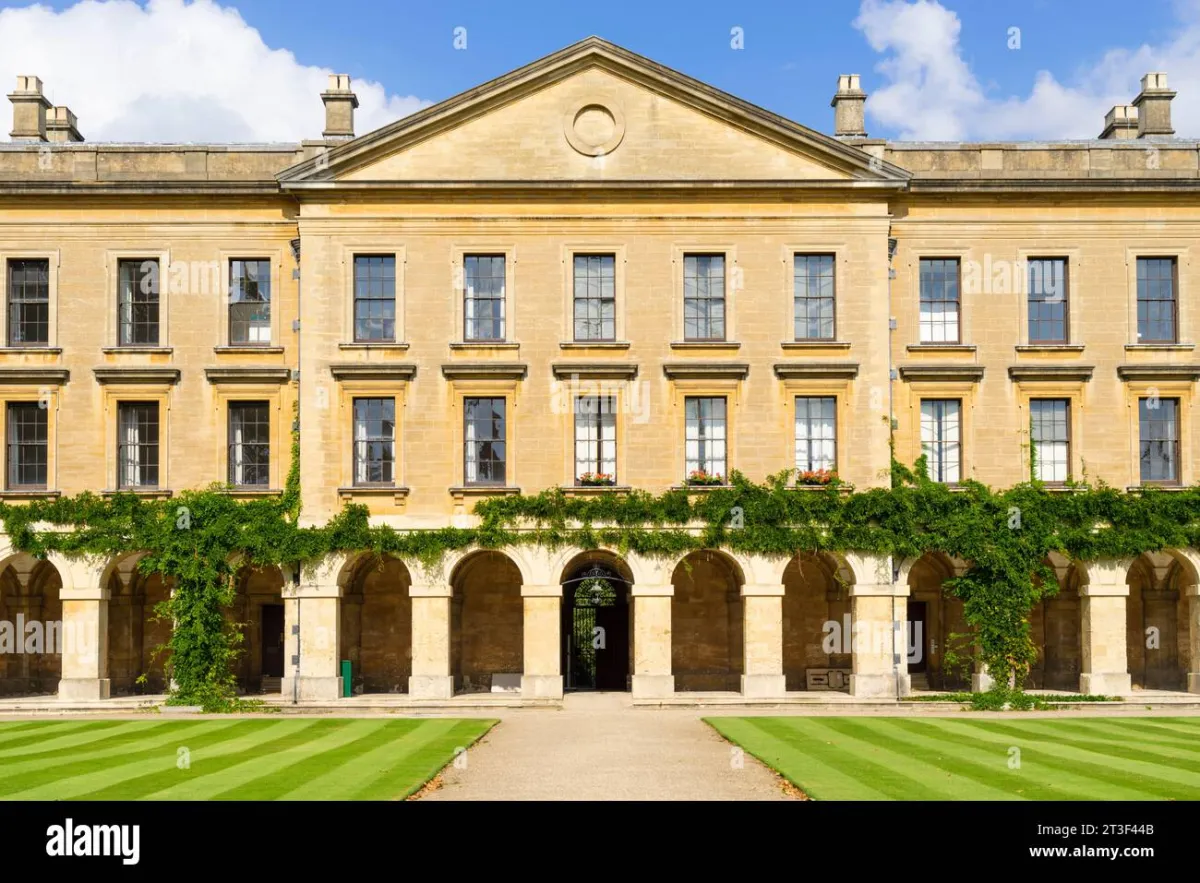 Photo: Magdalen College Oxford, via c8.alamy.com
The Postcode Conspiracy
The introduction of postcodes should have solved everything. No more need to pronounce 'Godmanchester' correctly when 'PE29 2AP' does the job perfectly. But somehow this only made the pronunciation police more militant. Now they had backup: "It's 'Gum-ster,' and if you'd bothered to learn the postcode properly, you'd know that."
Satnav systems have become unwitting accomplices in this linguistic terrorism. Try getting a GPS to pronounce 'Wymondham' ('Wind-ham') correctly and you'll understand why so many delivery drivers look permanently confused.
The London Exception
London operates under different rules entirely. Here, mispronouncing 'Marylebone' as 'Mary-le-bone' instead of 'Mar-li-bun' marks you as a tourist, but it's a forgivable tourist mistake. The city's too busy and too international to maintain the same level of pronunciation puritanism as the shires.
Except for 'Southwark.' Get that wrong ('South-wark' instead of 'Suth-erk') and even the most cosmopolitan Londoner will wince visibly.
The Training Ground
Railway announcements have become Britain's unofficial pronunciation academy. "The next station is Leominster"—pronounced 'Lem-ster' by the automated voice with the sort of crisp authority that brooks no argument. These digital tutors have probably prevented more social embarrassment than the entire British education system.
Though they're not infallible. Try explaining to a confused American why 'Derby' is 'Dar-bee' when the announcer has been saying 'Der-bee' for the past three stops.
The Modern Dilemma
Younger generations, raised on international media and global connectivity, are gradually abandoning some of these linguistic fortresses. But their elders guard the pronunciations like family heirlooms, passing down the correct way to say 'Belvoir' ('Beaver') with the solemnity of ancient wisdom.
The result is a generational divide where grandparents despair at grandchildren who say 'War-wick-shire' instead of 'War-ick-sher,' as if the very fabric of British civilisation depends on maintaining these arbitrary linguistic conventions.
The Visitor's Survival Guide
For the uninitiated, here's the harsh truth: there are no rules. 'Ough' can be pronounced at least eight different ways in British place names. 'Ham' sometimes means 'ham' and sometimes means 'um.' The letter 'z' in place names is treated like a foreign spy—acknowledged but viewed with deep suspicion.
Your best strategy is to mumble confidently and hope for the best. Most locals are too polite to correct you directly; they'll just remember your mistake forever and mention it at dinner parties for the next decade.
The Unspoken Truth
The dirty secret is that half the locals aren't entirely sure either. They've just learned to say it the way their parents did, who learned it from their parents, in an unbroken chain of linguistic tradition stretching back to a time when literacy was optional and consistency was a foreign concept.
But admitting this would undermine the entire system. So the pronunciation wars continue, with each correctly articulated 'Featherstonhaugh' ('Fan-shaw') serving as both victory and reminder that in Britain, even saying where you're going can be a test of cultural worthiness.