Rain Was Forecast. You Knew This. And Yet.
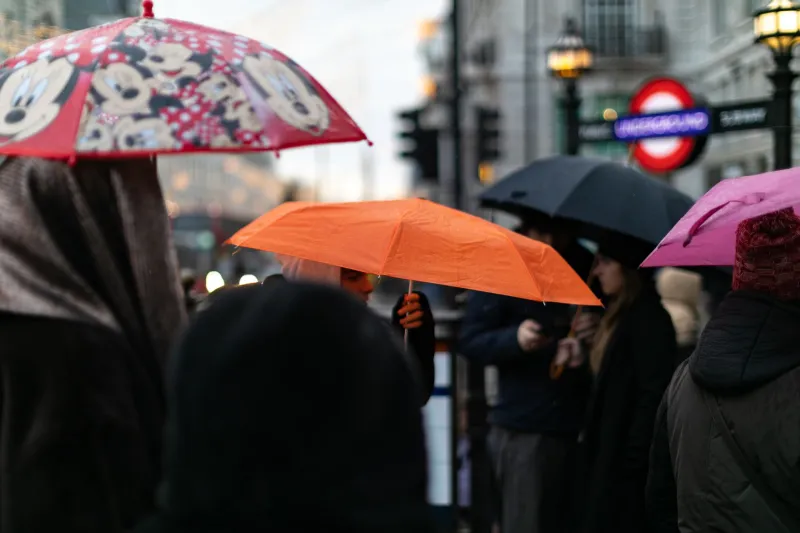
Let us begin with a confession that will require no prompting from this corner of the internet, because every person reading this has done it within the last fortnight.
You checked the forecast. It said rain — not ambiguously, not as a footnote, but with the full conviction of a national meteorological service that has been predicting British weather since 1854 and has, in that time, become reasonably confident about the general direction of things. You saw the forecast. You processed the information. And then you looked out of the window, decided it seemed "not too bad," and left the house without an umbrella.
Three hours later, you were standing outside a Wetherspoons in Wolverhampton, soaked to the fibres of your being, making the same observation that every British person makes in this situation: "It's really come down, hasn't it."
It has. It always does. This is the country where it does that.
The Forecast Was Right. It's Always Right.
Britain has, by any objective measure, one of the most sophisticated and accurate weather forecasting operations on the planet. The Met Office runs supercomputers of such computational power that they could, theoretically, model the exact trajectory of every individual raindrop over the British Isles for the next fortnight. They issue colour-coded warnings. They have a website, an app, and a social media presence that communicates imminent precipitation with the urgency of a wartime broadcast.
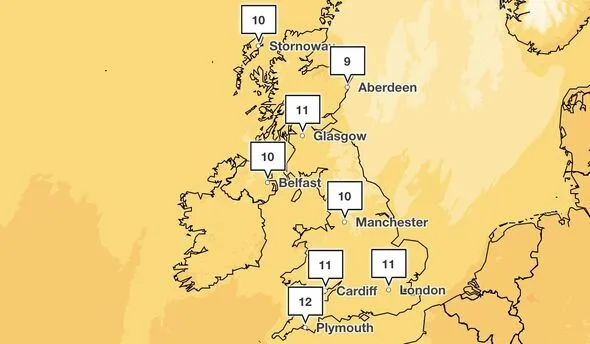 Photo: Met Office, via cdn.images.express.co.uk
None of this matters.
Not because the forecasts are wrong — they are, with impressive regularity, correct — but because the British public has developed an extraordinary psychological defence mechanism that converts meteorological certainty into optimistic ambiguity the moment it becomes personally inconvenient.
"There's a chance it might clear up" is a sentence spoken by a nation that has not, in recorded history, experienced a morning that unambiguously cleared up by lunchtime without doing something else unpleasant in the interim.
"It's only a light shower" is deployed to describe what the Met Office would classify as a yellow warning event.
"I'll only be out for twenty minutes" is the most dangerous sentence in the English language, spoken exclusively by people who will be out for two hours.
The Warning System Nobody Reads
The Met Office colour-coded weather warning system — green, yellow, amber, red — was designed to communicate risk clearly and proportionately to a public that might otherwise underestimate the severity of incoming conditions.
In practice, it has become a taxonomy of British indifference.
Green: ignored entirely, as it represents the baseline state of mild unpleasantness that Britons consider "normal weather."
Yellow: acknowledged, briefly, before being dismissed on the grounds that yellow is not really a serious colour. Yellow is lemon drizzle cake. Yellow is a nice jumper. Yellow does not feel like a crisis.
Amber: treated with moderate concern by approximately fifteen per cent of the population. The rest proceed as normal while privately feeling that amber is probably just yellow with ambitions.
Red: genuinely alarming, but only if it happens to fall on a day when you were already planning to stay in. If you had tickets to something, red is reconsidered as possibly amber.
The system is excellent. Britain is not the system's target audience.
Rain as a Conversational Art Form
The truly baffling thing — the thing that elevates British weather behaviour from mere eccentricity into something approaching performance art — is that the same people who refuse to carry an umbrella are the people most likely to spend forty minutes discussing the weather in forensic detail.
Britain talks about weather constantly. Obsessively. With a level of analytical engagement that, if applied to actual preparation, would result in a nation of people who are never wet.
We discuss the type of rain ("it's that fine stuff, gets you right through"), the unexpectedness of the rain (it was entirely expected), the regional injustice of the rain ("apparently it was lovely in Bristol"), and the historical context of the rain ("we haven't had a proper summer since 2018"). We compare it to other rain. We speculate about whether it will stop. We agree, with the gravity of people sharing significant news, that "it's not the cold, it's the damp."
And then we go out the next morning without an umbrella.
The Umbrella Economy
Britain does own umbrellas. Collectively, we own an enormous number of them. The question is not possession but deployment — specifically, the logistical and psychological gap between knowing that an umbrella exists somewhere in your house and the decision to carry it.
The umbrella sits by the door. It has sat by the door for eleven days, through four separate rain events, because each morning you have looked at it, looked at the sky, and concluded that today is probably the day you won't need it.
Alternatively, you carry the umbrella on the one dry day of the month and leave it on the bus, contributing to the 80,000 umbrellas left on Transport for London services annually — a figure that represents not carelessness but optimism. You left the umbrella because it didn't rain, and you thought: it won't rain tomorrow either. It will.
 Photo: Transport for London, via promova.com
There is also the question of umbrella quality stratification. Britain maintains two classes of umbrella: the good one, kept at home for safekeeping, and the £4.99 one from a petrol station forecourt purchased in a moment of crisis, which will invert in the first meaningful gust of wind and provide approximately the same protection as a large hat.
Being Soaked Outside a Wetherspoons: A National Tradition
There is something almost ceremonial about the specific experience of being caught in rain outside a British pub. You are there because you either couldn't get a table inside or because the smoking area has, over time, become where the conversation actually happens. Either way, you are wet, holding a pint that is being diluted by precipitation, telling someone that it's really come down.
This is not a failure state. This is Britain operating exactly as designed.
The weather is the great social leveller — it soaks the prepared and the unprepared alike, though the prepared are at least drier about it. It provides an inexhaustible topic of conversation, a shared enemy, a reliable excuse, and a reason to go inside somewhere warm and order something hot.
Perhaps, in the end, the umbrella is beside the point. The rain is not a problem to be solved. It is the wallpaper of national life, the backdrop against which everything else occurs, the one constant in a country that can agree on very little else.
It will rain tomorrow. You will check the forecast. You will see the three little raindrops on the app.
You will decide it looks like it might be fine.
It will not be fine.
See you outside the Wetherspoons.