The Queue Whisperers
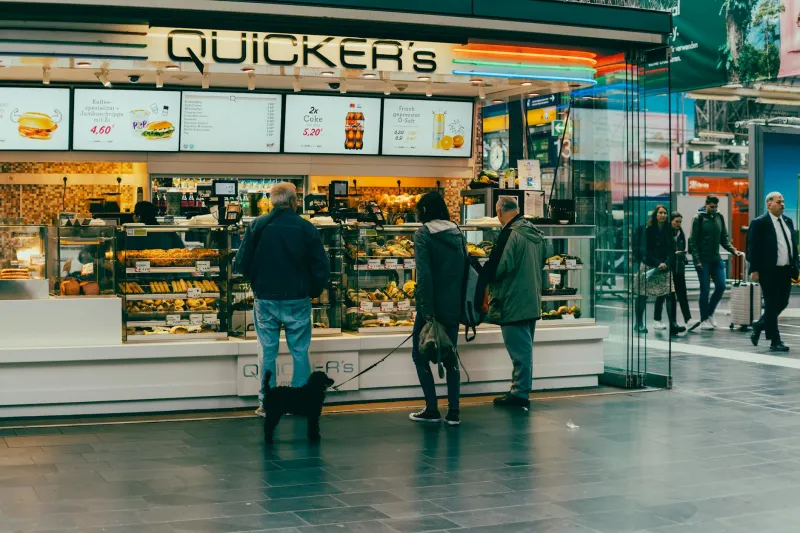
There was a time when queuing was simple. You stood behind the person in front of you, occasionally tutted at weather, and eventually reached the front. Job done. Civilisation maintained. But somewhere between the invention of the smartphone and the collective realisation that we could photograph queue-jumpers for social media justice, Britain's most sacred ritual transformed into something resembling performance art crossed with psychological warfare.
The modern British queue is no longer about waiting your turn. It's about demonstrating your moral superiority through the medium of strategic positioning and theatrical sighing. We've weaponised standing still.
The Invisible Hierarchy
Every queue now operates on at least seventeen different levels of unspoken social stratification. There's the Obvious Queue Leader, usually someone who arrived at 6am for a shop that opens at 9am, clutching a thermos and radiating the smug satisfaction of the chronically over-prepared. Below them lurk the Queue Legitimisers—those who arrived second and spend their entire wait validating the first person's dedication while simultaneously establishing their own queuing credentials.
Then come the Anxious Middleweights, perpetually worried they've misunderstood some crucial queuing protocol and might accidentally commit a queue crime punishable by tutting. At the bottom of the hierarchy sit the Queue Innocents—tourists, teenagers, and anyone who dares to look confused about whether this is actually a queue or just a collection of people who happen to be standing in roughly the same direction.
The Theatre of Queue Violation
Queue-jumping has evolved from simple rudeness into Britain's most reliable source of public entertainment. The modern queue-jump incident follows a precise dramatic structure that would make Shakespeare weep with envy. Act One: The Violation (someone steps out of line order). Act Two: The Recognition (the sharp intake of breath from witnesses). Act Three: The Passive-Aggressive Escalation (meaningful looks, pointed coughing, eventual intervention by the Queue Justice Warrior).
The Queue Justice Warrior deserves special mention. This is the person who appoints themselves Sheriff of Standing Still, ready to deliver a lecture on queue etiquette that somehow manages to reference both the Blitz and proper British values. They've turned queue policing into a hobby, and frankly, they're better at it than most actual police.
Digital Purgatory: The Virtual Queue
Just when we thought we'd mastered the art of physical queuing, some bright spark invented the virtual queue. Suddenly, we're not just standing in line—we're logging into apps, receiving text updates, and checking our 'queue position' like day traders monitoring stock prices.
The virtual queue promises to eliminate waiting, but instead delivers a special kind of psychological torture. You're simultaneously everywhere and nowhere, freed from physical standing but enslaved to your phone screen. You can leave the area, but you can't really leave, because what if your number comes up and you're not there? What if the app crashes? What if the WiFi dies and you lose your place in the digital void?
We've managed to make queuing more stressful by removing the actual queue.
The Spiritual Dimension
Somewhere in the last decade, queuing acquired mystical properties. There are now people who speak of 'queue mindfulness' and 'embracing the wait.' Wellness influencers post Instagram stories about finding peace in supermarket queues. Meditation apps offer guided sessions specifically for queue anxiety.
This is what happens when a nation of chronic queuers gets too much time to think about queuing. We've turned waiting in line into a spiritual practice, complete with breathing exercises and gratitude journals. Next week, someone will probably launch a queue yoga class.
The Queue Identity Crisis
The pandemic broke something fundamental in Britain's queuing psyche. Suddenly, we had to queue outside shops, spaced two metres apart, following floor stickers like some sort of retail hopscotch. The sacred geometry of the queue was violated by public health requirements, and we're still recovering from the trauma.
Now we have hybrid queues, socially distanced queues, and queues that exist purely to manage other queues. We're queuing to queue. The system has achieved a level of recursive absurdity that would impress Kafka.
The Queue as National Identity
Perhaps the most British thing about our queuing obsession is how we've convinced ourselves it's uniquely British. We've mythologised our ability to stand in line as if it were some sort of superpower, when in reality, most other countries have mastered the basic concept of 'first come, first served' without turning it into a competitive sport.
But that's the genius of British queuing culture. We've taken something utterly mundane and transformed it into a complex social performance that somehow defines our national character. We don't just queue—we queue with style, with purpose, with barely contained fury at anyone who doesn't queue correctly.
In a world of increasing chaos, the queue remains our last bastion of order. Even if that order is now governed by more unspoken rules than a Jane Austen dinner party, enforced by people who've turned queue monitoring into an extreme sport, and somehow made more complicated by technology designed to simplify it.
The queue endures. Long may it stand still.