I Agreed to What? The Fine Print Fever That's Consuming British Life
The Moment Everything Changed
There was a time, lost now in the mists of legal prehistory, when signing up for a swimming lesson involved walking to the local pool, handing over some coins, and jumping in the water. Today, that same transaction requires more legal documentation than the Treaty of Versailles and carries more liability implications than a nuclear weapons treaty.
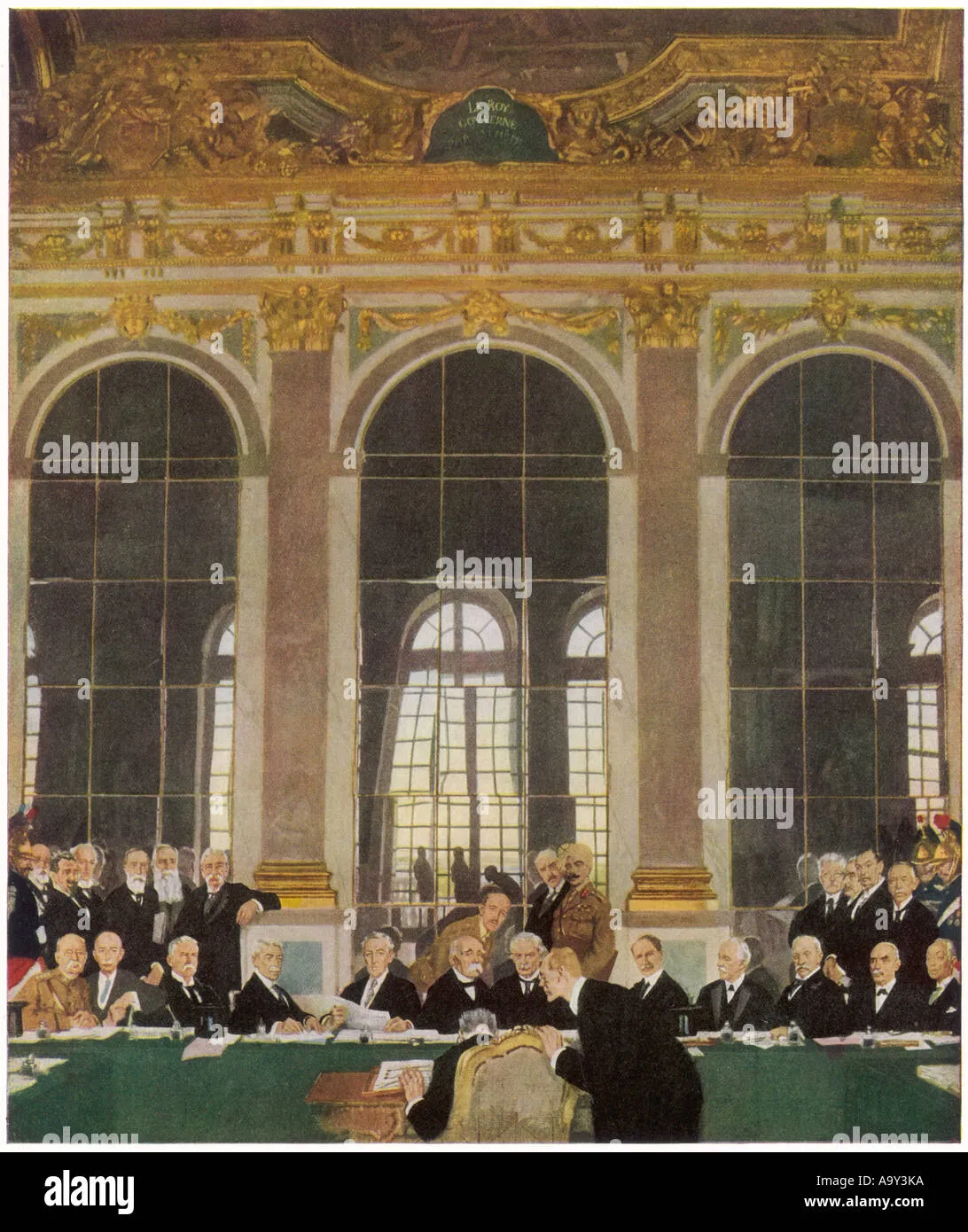 Photo: Treaty of Versailles, via c8.alamy.com
Welcome to modern Britain, where every interaction has been transformed into a complex legal relationship, and where the simple act of wanting to learn the breaststroke requires you to waive more rights than a prisoner of war.
The Archaeological Dig Through Leisure Centre Legalese
Let's examine the modern masterpiece that is the 'Participant Agreement and Liability Waiver for Aquatic Activity Engagement.' This document, which must be completed before you're allowed within fifty metres of chlorinated water, represents the finest flowering of British bureaucratic paranoia.
Clause 1 establishes that by entering the building, you acknowledge the existence of water and its potential wetness. Clause 2 requires you to confirm that you understand swimming involves movement. By Clause 15, you're somehow accepting responsibility for climate change, and by Clause 23, you've apparently agreed to indemnify the council against damages caused by your descendants until the heat death of the universe.
The data protection section alone requires a law degree to navigate. You're asked to consent to sharing your swimming preferences with 'selected partners in the wellness ecosystem' — which translates to 'we'll sell your details to anyone with a functioning email address and a vague connection to the fitness industry.'
The Great Liability Shift
Somewhere in the past two decades, British institutions collectively decided that the best way to manage risk was to transfer all of it to the customer. The result is a legal landscape where attempting to use any public service requires you to accept responsibility for everything from equipment failure to acts of God.
Consider the humble soft play centre, where toddlers are invited to hurl themselves around padded obstacles while their parents sign documents that would make a corporate lawyer weep. These agreements typically include clauses covering 'injury caused by excessive enjoyment,' 'accidents resulting from age-appropriate behaviour,' and — my personal favourite — 'damages arising from contact with other children.'
It's as if we've decided that fun itself is inherently liable, and the only way to permit it is to make everyone involved sign away their fundamental rights as human beings.
The Digital Consent Industrial Complex
The online booking system has elevated this madness to new heights of absurdity. Before you can reserve a badminton court, you must navigate a digital obstacle course that would challenge a trained cryptographer.
First, you create an account, which requires accepting the website's terms of service — a document longer than most novels and about as comprehensible. Then you confirm your email address, which somehow involves agreeing to receive marketing communications from seventeen different subsidiary companies you've never heard of.
Next comes the booking itself, which triggers a cascade of additional agreements: the facility usage terms, the equipment liability waiver, the photography consent form, the emergency contact data processing agreement, and — inexplicably — a clause about your willingness to participate in customer satisfaction surveys until the end of time.
By the time you've clicked 'I agree' for the fourteenth time, you've somehow committed to more legal obligations than most marriages involve.
The Phantom Menace of Force Majeure
Perhaps the most beautiful example of legal overreach is the inclusion of force majeure clauses in leisure centre agreements. These provisions, originally designed for major commercial contracts, now appear in documents governing your right to use the council gym.
You'll find yourself agreeing that the facility cannot be held responsible for cancellations caused by 'acts of war, natural disasters, government intervention, or cosmic events beyond human control.' It's as if the local swimming pool has become so important to national security that its operation might be disrupted by alien invasion.
The truly magnificent part is that these same agreements often fail to guarantee basic services like functioning showers or adequate heating. You're legally protected against meteor strikes but not against the pool being closed because someone forgot to order chlorine.
The Consultation Theatre
The most insidious aspect of this legal creep is how it masquerades as customer protection. Every additional clause is presented as being 'for your safety' or 'to ensure the best possible experience.' The reality is that these documents exist primarily to protect institutions from the consequences of their own incompetence.
The language itself is designed to obscure rather than clarify. 'Dynamic risk assessment protocols' means 'we might close things without warning.' 'Flexible service delivery arrangements' translates to 'we'll change the rules whenever it suits us.' 'Enhanced safety procedures' means 'we've added more forms to fill out.'
The Unread Masses
The dirty secret of this entire system is that nobody — absolutely nobody — actually reads these documents. They're too long, too complex, and too deliberately obscure for normal human consumption. We've created a legal framework based on the fiction that people carefully consider seventeen pages of subclauses before deciding whether to book a tennis court.
Surveys suggest that the average Briton 'agrees' to terms and conditions equivalent to the complete works of Shakespeare every year, without reading a single word. We've accidentally created a parallel legal universe where everyone is bound by contracts they've never seen.
The Institutional Anxiety Disorder
What drives this compulsive legal documentation? It's the same institutional paranoia that requires risk assessments for changing light bulbs and health and safety briefings for using staplers. We've become a country so terrified of liability that we've decided the only safe assumption is that every human interaction is a potential lawsuit waiting to happen.
The result is a society where the paperwork for participating in life has become more complex than life itself. We've created a system where the administrative overhead of having fun now exceeds the actual fun by several orders of magnitude.
The Way Forward
Perhaps it's time to acknowledge that we've gone slightly mad. Maybe — just maybe — we could trust people to understand that swimming involves water, that trampolines are bouncy, and that badminton occasionally results in minor injuries.
But until that blessed day of common sense arrives, we'll continue to sign our lives away, one incomprehensible clause at a time, in the desperate hope that somewhere, buried in the fine print, lies permission to simply exist in public spaces without a lawyer present.
After all, this is a country where you need a licence to watch television. Seventeen-page swimming agreements are just the logical conclusion.