From Emergency Calls to Emergency Chutney: The Magnificent Obsession with Dead Phone Boxes
The Great Repurposing Revolution
In the annals of British bureaucratic creativity, few phenomena match the sheer inventive desperation displayed in the repurposing of the humble red phone box. What began as a practical solution to a simple problem — what to do with thousands of redundant telecommunications infrastructure — has evolved into a national obsession with transformation that would make Marie Kondo weep.
Walk through any British town today, and you'll encounter phone boxes that have been reimagined as everything except, crucially, phone boxes. It's as if the entire country has collectively agreed that the original function must be erased from institutional memory, lest anyone accidentally try to make a phone call.
The Library That Wasn't
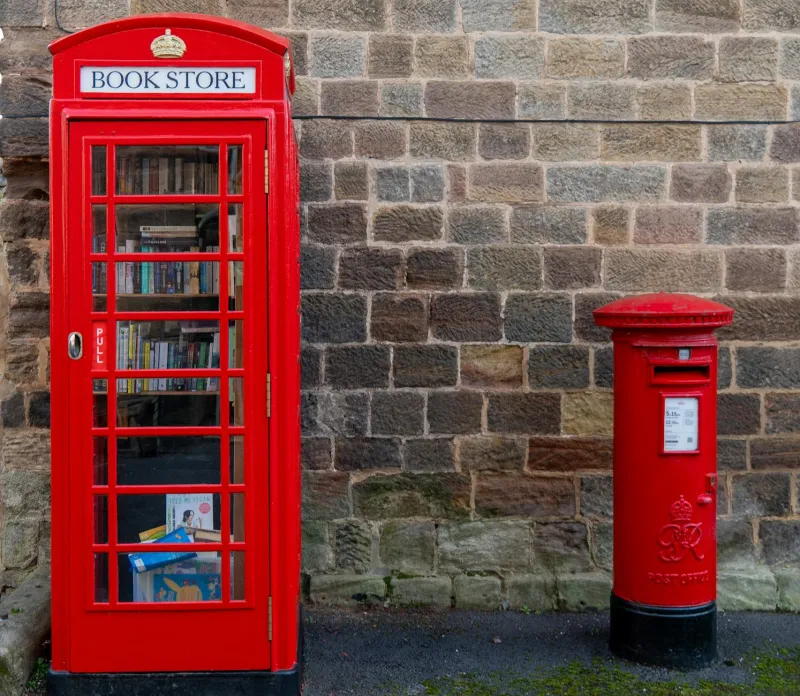
The 'community library' represents perhaps the purest expression of phone box repurposing ambition. Picture, if you will, a space roughly the size of a wardrobe, crammed with three dog-eared paperbacks, a 1987 road atlas, and someone's abandoned university textbook on Advanced Accounting Principles.
These 'libraries' are maintained with touching optimism by parish councils who've convinced themselves they're fostering literacy. In reality, they're creating tiny monuments to good intentions, where the same copy of 'Fifty Shades of Grey' has been circulating since 2012, its pages now the consistency of tissue paper.
The signage alone tells the story: 'Little Middleton Community Book Exchange and Heritage Learning Hub.' It's a phone box with some books in it, but calling it that would apparently lack sufficient gravitas for the grant application.
Defibrillator Storage: When Life Support Meets Listed Building Status
The defibrillator phone box represents British pragmatism at its most wonderfully contradictory. These boxes, painted regulation red and lovingly maintained as heritage features, now house life-saving equipment behind glass panels that require a code to open in emergencies.
The irony is exquisite: we've preserved the aesthetic of emergency communication while housing actual emergency equipment. It's as if someone decided the best way to honour the past was to make it slightly more complicated to save someone's life.
Local councils trumpet these installations as 'community resilience initiatives,' apparently unaware that they've created a system where cardiac arrest victims must first pass a heritage appreciation test.
The Artisan Coffee Revolution
Perhaps nowhere is the phone box transformation more ambitious than in the 'micro-retail experience.' These establishments — and yes, that's what they call themselves — cram an entire café into a space originally designed for one person to make a quick call.
The barista, wedged into this crimson cupboard like a well-dressed sardine, serves 'locally-sourced, ethically-traded, small-batch artisan beverages' through a window that once dispensed change for payphone calls. The menu, naturally, requires a degree in coffee linguistics to navigate: 'hand-pulled espresso with oat milk alternative and heritage honey drizzle.'
Customers queue outside in weather that would make Scott of the Antarctic reconsider his life choices, all for the privilege of paying £4.50 for coffee served from what is essentially a very small shed with delusions of grandeur.
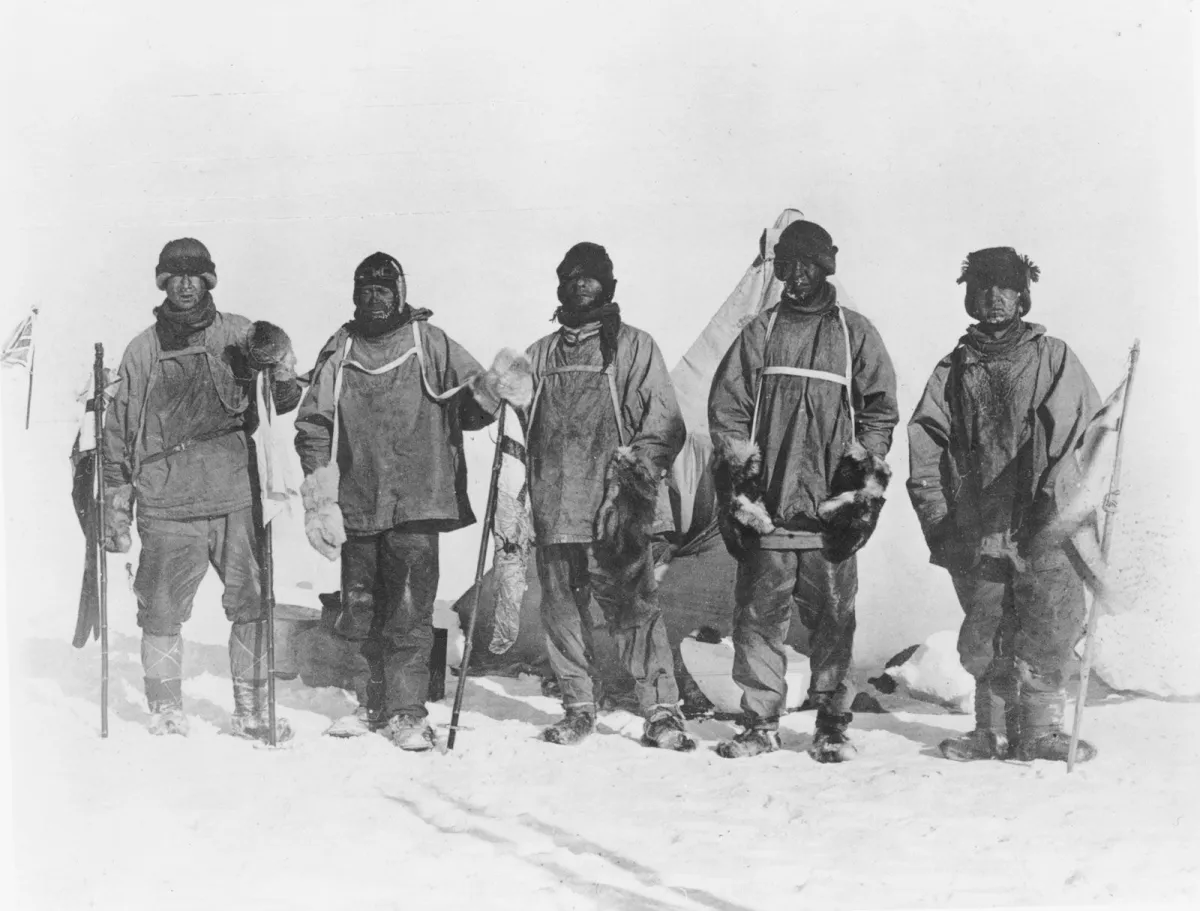 Photo: Scott of the Antarctic, via cdn.britannica.com
The Wellness Hub Phenomenon
The 'community wellness hub' represents the apotheosis of phone box reinvention. These installations typically contain a blood pressure monitor that hasn't worked since the Thatcher administration, some leaflets about mental health that have achieved the consistency of confetti, and a visitors' book where locals can record their thoughts on community wellbeing.
The signage invariably promises 'holistic support for mind, body, and spirit,' which translates to 'broken equipment and soggy pamphlets.' Yet councils celebrate these installations as evidence of their commitment to public health, apparently believing that wellness can be achieved through heritage-listed medical equipment storage.
The Administrative Afterlife
Behind every repurposed phone box lies a paper trail that would make Kafka proud. Planning applications, heritage assessments, community consultation documents, risk assessments for the risk assessments — the bureaucratic infrastructure required to turn a phone box into a book repository now costs more than the original phone box.
Council minutes reveal the extraordinary effort invested in these projects: 'Following extensive stakeholder engagement and feasibility analysis, the Strategic Community Assets Committee recommends proceeding with the Heritage Communications Infrastructure Repurposing Initiative, Phase 2B.' Translation: we're putting some books in a phone box.
The Tourism Industrial Complex
The repurposed phone box has become a destination in its own right, complete with heritage trails, Instagram opportunities, and guided tours. Tourists now travel hundreds of miles to photograph themselves pretending to read in a converted phone box, creating an economy based entirely on the novelty of functional obsolescence.
Local tourism boards have embraced this phenomenon with characteristic British enthusiasm, producing glossy brochures celebrating 'authentic heritage retail experiences' and 'immersive community engagement opportunities.' It's as if we've decided that the best way to preserve the past is to make it completely unrecognisable.
The Unspoken Truth
Perhaps the most remarkable aspect of the great phone box repurposing project is what it reveals about British institutional psychology. Rather than simply admitting that something has become obsolete and removing it, we've created an entire industry dedicated to creative denial.
We've preserved the shells while gutting the souls, maintained the aesthetics while abandoning the function. It's preservation through transformation, heritage through reinvention — a uniquely British solution to the problem of progress.
The red phone box, once a symbol of efficient communication, has become a monument to our inability to let go. And perhaps that's the most British thing of all.