Back Soon (Define 'Soon'): A Cultural History of the Indefinitely Shut Door
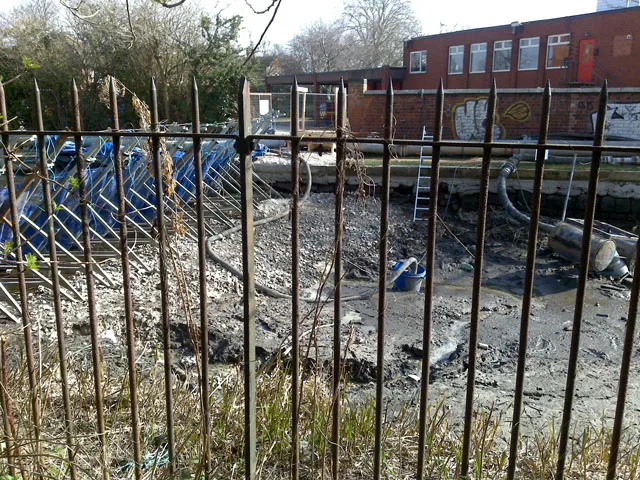
Photo: David Lally, CC BY-SA 2.0, via Wikimedia Commons
Somewhere in Britain — and it genuinely could be anywhere, which is the point — there is a swimming pool that has been 'closed for essential maintenance' since 2019. The sign has faded to a pleasing sepia. Children who once took armbands lessons there now hold mortgages. And still the sign says, with unshakeable confidence, that the pool will reopen 'as soon as possible'.
This is not an isolated incident. It is a national condition.
The Laminated Apology as a Art Form
The 'closed for essential maintenance' notice is the closest thing modern Britain has to public art. Consider its craftsmanship: the font chosen from a 2007 Word document, the two bits of blu-tack that have outlived three governments, the word 'essential' doing the heavy lifting of a word that has never once been interrogated. Essential to whom? Essential in what sense? The sign does not answer. The sign simply is.
In Leicester, a lift in a multi-storey car park has been 'being serviced' for three consecutive winters. Locals have stopped climbing the stairs and started referring to the lift in hushed tones, as one might refer to a sleeping bear or a difficult uncle. 'Oh, the lift? No, no. You don't go near the lift.'
The Folklore Economy
What grows in the vacuum of information? Rumour, glorious rumour. Every closed-down leisure centre, every shuttered library annexe, every public toilet 'closed for a deep clean' since the pandemic acquires a body of local legend that would embarrass the Arthurian canon.
Behind the door of the closed swimming pool in question, residents will tell you, there is: a hole to the centre of the earth; asbestos, but loads of it; a contractor who left in 2021 with the only key; or, in the version favoured by the more literary residents of the town, 'nothing at all, just the pool, still full, untouched, like a tomb'.
Nobody has verified any of this. Nobody needs to. The closed sign is a permission slip for the imagination, and local Facebook groups have taken it.
The Shrug
Then there is the council employee. Every institution that has closed 'temporarily' is guarded by one municipal official who has perfected the shrug into something approaching ballet. Shoulders rise, palms turn skyward, eyebrows perform a small tragic aria. It communicates, wordlessly: I did not close it. I cannot open it. Please do not make this harder than it already is.
It is, in its way, the most honest public communication in Britain today. More honest than any press release. More honest than any consultation. The shrug at least admits what every laminated sign conceals: that nobody is coming, and nobody quite knows why.
'Essential' Maintenance, Non-Essential Everything Else
The genius of the phrase is that it pre-loads sympathy. Essential maintenance sounds responsible, prudent, the act of a caring institution. Who could object to maintenance? Certainly not the person objecting, who is instead handed a leaflet about the council's commitment to community leisure provision.
And yet the pool remains dry. The lift remains still. The public loo on the A-road remains a shrine to a deep clean that has evidently achieved enlightenment and passed beyond the material plane.
A Modest Proposal
Perhaps it's time for honesty in signage. A national standard: 'Closed. We are aware. There is no date. Thank you for not making a scene.' At least then the laminated apology and the reality would be in agreement, and the folklore could retire with dignity.
Until then, the doors stay shut, the signs stay up, and somewhere out there a contractor with the only key is living an entirely unremarkable life, unaware he is the subject of a legend.