Six Weeks, Four Portals, One Shed: A Planning Permission Odyssey for the Quietly Determined
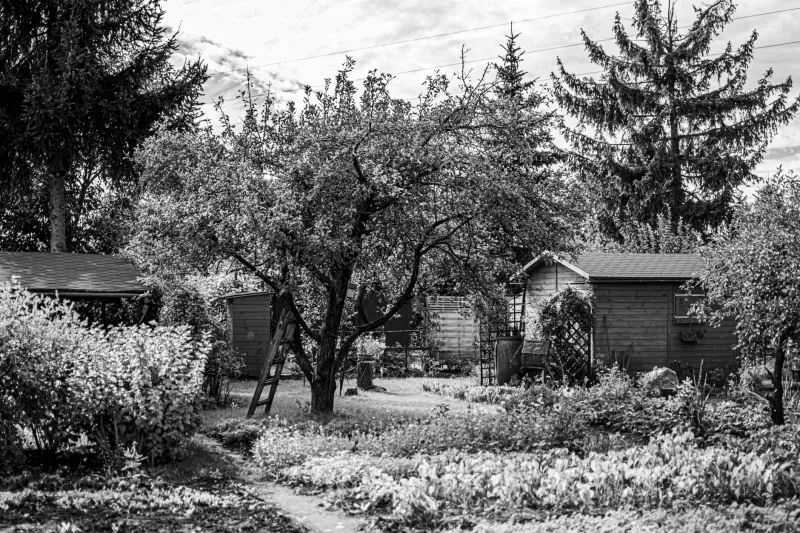
I want to be clear about what I was trying to build. Not an annexe. Not a home office with underfloor heating and bi-fold doors. Not one of those garden rooms that estate agents describe as 'ideal for a variety of uses' and charge you an extra £40,000 for. I wanted a shed. A wooden shed. Eight feet by six. The kind of thing you buy flatpack from a garden centre and spend a dispiriting Sunday afternoon assembling with a mallet and a marriage on the line.
I mention this because, four months later, I am still not entirely certain I am permitted to build it.
The Permitted Development Rabbit Hole
My first mistake was Googling 'do I need planning permission for a shed.' This is the kind of question that feels simple and is, in practice, the entrance to a labyrinth from which several people appear never to have emerged.
The answer, according to the Planning Portal — which is the government's official online resource and which looks as though it was designed in 2009 and last updated during the second Cameron administration — is: it depends. Specifically, it depends on whether your shed falls under 'permitted development rights,' which themselves depend on: the height of the shed at the ridge, the height at the eaves, the proximity to a boundary, the proportion of the garden the shed will cover, whether you live in a conservation area, whether your property is listed, whether there are any Article 4 directions in force, and — this is not a joke — whether the shed will be positioned within two metres of a boundary, in which case the maximum height drops from 2.5 metres to 2 metres, except in certain circumstances which are explained in a separate document that links to a third document that was last updated in 2015 and contains a broken hyperlink.
I read all of this for approximately ninety minutes. I then read it again. I then found a forum thread on a DIY website where someone called PermittedDev_Pete had been answering questions about this for eleven years with the weary authority of a man who has seen things.
Pete suggested I contact my local council for 'pre-application advice.'
The Pre-Application Consultation: A Love Story
Pre-application advice is, in theory, a service whereby you describe your proposed development to a planning officer before submitting a formal application, and they tell you whether it's likely to be approved. In practice, it is a £75 fee, a six-week wait, and a response that says your proposal 'raises no immediate concerns at this stage but should not be taken as an indication of the likely outcome of any formal application.'
I submitted my pre-application enquiry in early September. The portal accepted my payment, generated a reference number, and then timed out. I received no confirmation email. I submitted it again. The portal accepted my second payment, generated a different reference number, and then also timed out. I rang the council. The phone was answered after twenty-two minutes by a gentleman who confirmed that both applications had been received, that I would be refunded one of the £75 fees 'in due course,' and that the expected response time was currently 'around eight weeks, possibly a bit longer.'
I asked whether I might simply describe the shed to him, right now, over the phone, and he might tell me if it was fine. He was very sorry. That wasn't how the process worked.
The Neighbour
I had, at this point, made the error of mentioning the shed to my neighbour, Derek, in the spirit of being a considerate and communicative member of the community. Derek is a retired engineer who has lived next door for nineteen years and who I have always found perfectly pleasant in the way that neighbours are pleasant when you are not proposing to build anything within his sightlines.
Derek's response was measured and immediate. He would not, he said, be making any comment until he had seen the formal application. He then asked me to confirm the proposed ridge height, the proposed eaves height, and the precise distance from our shared boundary. I told him it was a shed. He said he understood that, and asked me to confirm the dimensions.
Three weeks later, I received notification from the council that a formal objection had been submitted regarding my pre-application enquiry — which, I had understood, was not a formal application and therefore could not formally be objected to. The objection, two pages long and formatted with the precision of a man who once worked in structural engineering, cited 'potential impact on visual amenity,' 'loss of light to boundary planting,' and a concern that the proposed structure might set a precedent for 'further intensification of development' in the rear garden.
I read this three times. I poured a glass of wine. I read it again.
The Portal, Revisited
The pre-application response, when it finally arrived in early November — eleven weeks after submission, not eight — confirmed that my shed 'appeared to fall within permitted development parameters' but recommended I obtain a Lawful Development Certificate 'for certainty.' A Lawful Development Certificate is a formal document confirming that something you are doing does not require planning permission. It costs £103. It takes eight weeks. It requires you to submit drawings.
I do not have drawings. I have a box from a garden centre.
I submitted the application for the Lawful Development Certificate on a Tuesday afternoon. The portal accepted my payment, generated a reference number, and then — I want you to appreciate that I am not embellishing this — timed out.
The Shed Itself
The shed is currently in its box, in the garage, next to the broken lawnmower it was intended to replace. It has been there since August. The grow-bags have died. The garden looks, if anything, worse than it did before I began this process, because the presence of a large flat-packed shed box lends the whole area the atmosphere of a storage facility that has given up.
I am told the Lawful Development Certificate will be issued by mid-January. I am told this by a council officer who responded to my chasing email six weeks after I sent it, to confirm that the matter was 'still under review and progressing through the usual process.'
Britain is a country capable of extraordinary things. We built the Humber Bridge. We invented radar. We put a man-made island in the Thames to host an arts festival.
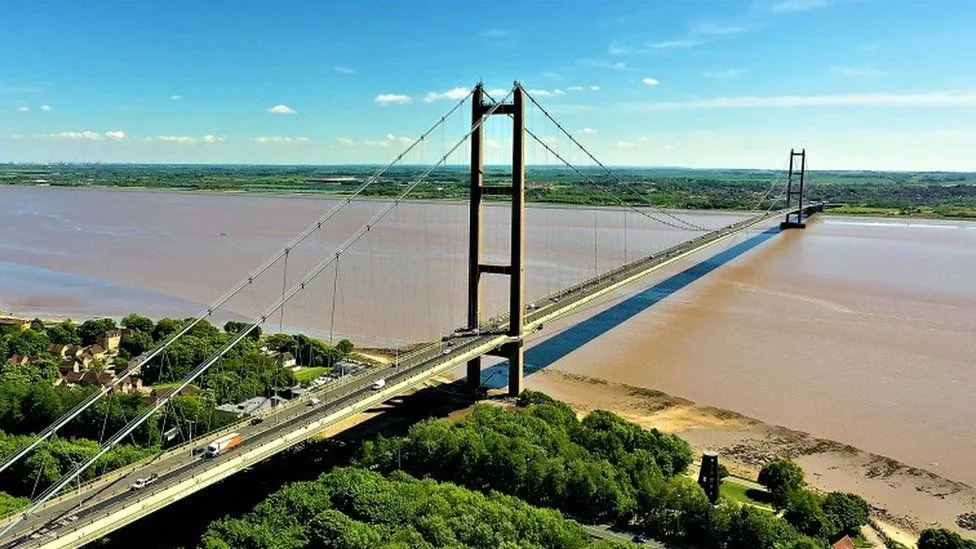 Photo: Humber Bridge, via ichef.bbci.co.uk
I cannot build a shed.
But I do have four reference numbers, which is something.